“My” Africa: A Month at Gimbie Hospital
One evening in mid-January, I sat reading a memoir entitled “West with the Night” in my room in the Gimbie Hospital compound in West Wollega, Ethiopia. The author, Beryl Markham, reflects upon her life and experiences as a pilot in Africa during the 1930’s and 40’s. One paragraph in particular caught my attention:
There are many Africas. There are as many Africas as there are books about Africa and as many books about it as you could read in a leisurely lifetime. Whoever writes a new one can afford a certain complacency in the knowledge that his is a new picture agreeing with no one else’s, but likely to be haughtily disagreed with by those who believe in some other Africa (Markham 8).
These words perfectly articulated a sentiment that I had felt ever since my arrival in Gimbie but had been unable to express as eloquently as Markham does in her book. I had heard so many stories from people who had traveled to Africa prior to my departure, and had talked extensively with my father as well as a couple of friends who had all preceded me in traveling to Gimbie. I read other accounts of Ethiopia in travel books before departing on my own month-long adventure. But no amount of preparatory research would ever have been able to accurately prepare me for what I would come to know as “my Africa.”
Africa. The very word seems to have its own distinct taste, so wild and exotic, on the tongue of the average American living in the upper Mid-west. A thick shroud envelopes the entire continent in mystery and conceals its true identity from our curious eyes. Visions of regal elephants and majestic giraffes, natives with brightly colored loincloths, and the flaming orange African sun beating down on the Sahara dance fancifully in our mind’s eye, but that was not my Africa.
My Africa is confined mostly to just one small town in western Ethiopia, but it has been such an incredible experience that I have no doubt I will carry with me its influence for the rest of my life. Or at least, I hope that I will. I look back on what I have learned in the past month, and I am amazed. As an average American, I was curious but largely ignorant about the desperately poor and disease stricken country in northeast Africa and the people who live there, and although I still cannot pretend to completely understand a culture so remarkably unlike my own, I have observed the world through a different lens and am so grateful for that glimpse and what it has taught me about the medical profession, the Ethiopian people, and life in general.
My experiences working and observing in the hospital were both amazing and horrific. I absolutely loved every minute of my work in the hospital, but sometimes the extreme sickness and suffering I observed was almost unbearable. I realize now that I had absolutely no concept of poverty until I arrived in Ethiopia, one of the world’s poorest nations, and saw it for myself. The average life expectancy is 45 years old, largely because people cannot afford proper medical care, and in many cases, proper medical care is not available. Many hospitals, like Gimbie Hospital, are forced to get by with what is available to them, because they simply are faced with no other choice, and in many cases, it is just not enough. But often, it is enough, and it provides a glimmer of hope in a country heavily plagued by AIDS, tuberculosis, malaria, malnutrition, typhoid fever, meningitis and a plethora of other diseases and medical problems.
Each morning began by going on ward rounds, which was a very different experience in itself. During my summers, I work in the emergency room at Mayo Clinic, where patient privacy and confidentiality is a huge emphasis. Privacy in most Ethiopian hospitals is a luxury that is rarely a feasible option. Each ward (female on the first floor and male on the second) consists of a large room with fifteen or twenty beds lined against the walls. During rounds, a group of doctors and nurses would walk from bed to bed and a doctor would present the patient’s history and discuss present treatment, do a brief examination, and then plans for further treatment would be made and orders given. Rounds were really educational because they would describe what patients’ symptoms were, their diagnosis, what treatments were being given and how the patient was responding to treatment. Most of the doctors were more than willing to answer questions that I had, and then I satisfied any further curiosity by reading about the disease in medical books during the evenings.
After rounds, I would have a pretty good idea of what to expect for the day, and as I was particularly interested in obstetrics and surgery, would ask the doctors or midwives in those areas if they would mind if I observed whatever procedures were planned, or tell them where to find me if an interesting case came in. They were usually very willing to have me watch, and often provided explanations for what they were doing and why, and sometimes even let me help out with various tasks.
My first interest in the obstetrics department came when one of the doctors, Henriette, asked me to assist her with a project she was working on involving obstetric fistulas. I was immediately drawn to this subject because fistulas are serious injuries that occur so infrequently in most developed countries, but are a difficult and widespread problem in Ethiopia, claiming about 9,000 new victims each year in addition to untreated cases in existence from previous years. Women develop fistulas because of difficulties in childbirth due to a number of factors. Often, Ethiopian women suffer from cephalo-pelvic disproportion that may be caused by malnutrition or simply because many women have children at such a young age in this society, and their bodies are not fully developed. Some of these women develop fistulas, and thus experience prolonged labor and a tremendous strain on the tissues, causing tears in the bladder.
The women are then often left by their husbands and ostracized by their communities because of the subsequent incontinence that they experience, often for years at a time if they cannot afford or are too ashamed to seek treatment. All of this sounded horrible to me, and was excited to help out with the project which would provide free operations for at least fifteen suffering women with the help of a fistula specialist from the Addis Ababa Fistula Hospital, recently put in the spotlight by Oprah Winfrey. Henriette provided me with reading material and I was to help with some of the pre-operative care and paper work, but unfortunately, the project was put on hold for a few weeks when Henriette had to leave the country due to her son’s illness, and resumed after I had already left Gimbie. I did have a chance to visit the Addis Ababa Fistula Hospital, and was very impressed by the hard work they do in their own facilities as well as in other parts of the country.
My interest in obstetrics, largely initiated by my original interest in obstetrical fistulae, continued to grow during my month in Gimbie, and I had the opportunity to observe several deliveries and caesarian sections. This exposure opened up an new potential professional interest, as I found that I enjoyed this department tremendously. My vision of the delivery room as a very happy, miraculous place was somewhat tainted, however, by the hardships I observed Ethiopian women facing with pregnancy and delivery, but it made me want to do something about it. Most women cannot afford to come, or choose not to, to the hospital for periodic checkups during their pregnancies, and many problems that could be addressed earlier during the pregnancy cause difficulties during labor and delivery. As a result, the infant mortality rate is about 10% (Briggs 5) and the number of necessary caesarian sections preformed is astounding-approximately 35% of deliveries at Gimbie Hospital according to hospital records and that can cause complications for subsequent pregnancies, and in one case that I saw, resulted in an obstetric fistula.
In addition to obstetrics, I also developed an interest in observing in surgery. Two general surgeons worked at the hospital, and I was able to observe a wide variety of surgical procedures. I saw a circumcision which had to be preformed because the original circumcision, which had been preformed in the traditional way, had resulted in a lot of scar tissue which left the young boy unable to urinate. I watched the surgeons treat a badly burned hand by cutting all the dead skin away, a bowel obstruction, a hysterectomy, and even got to assist by holding an instrument that kept a patient’s mouth open while the surgeon removed a tumor from his gum. I also watched as two tumors (one that was as big as my fist) were removed from a woman’s uterus, and was observing when the doctors opened up a woman to perform a hysterectomy on a woman who had had a prolapsed uterus and, to their surprise, found a huge ovarian mass that had extended all over her intestines. It was so hard to see some of the surgeries, particularly the removal of the tumors, because if the cancerous, there were very few realistic options available for the patients. Chemotherapy is not available at Gimbie Hospital, and patients are referred to hospitals in Addis Ababa, but few can afford further treatment. Cancer is a terrible enough illness to get in a developed country, but at least with many of the advanced treatments, there is some hope. It seemed in many cases in Ethiopia, there was very little hope for individuals unlucky enough to get sick because they can so rarely afford the treatment that it entails.
Besides observing, I also kept busy by doing odd-jobs around the hospital I was asked to do a lot of organizational tasks, so I helped to organize supplies in the new intensive care unit room, sorted surgical tools in the storage room, organized medical books that had been donated to the hospital and created a library, and sorted, stocked and labeled a lot of surgical sutures. Even these tasks were good learning experiences, because I learned a lot about what different tools are used for during surgery, and the differences between all the various types of sutures. It was satisfying to know that I also played a role in making the hospital a more organized place—it seems there are endless lists of improvements that the hospital needs to make, and there are just not enough available hands to make them all happen. The workload is already overwhelming for the staff, so I was happy to make my little contribution and make their lives a little easier.
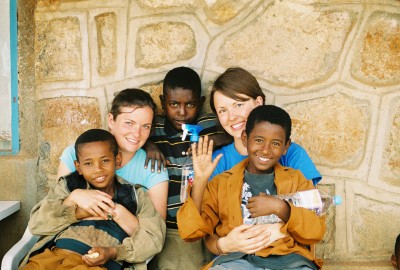
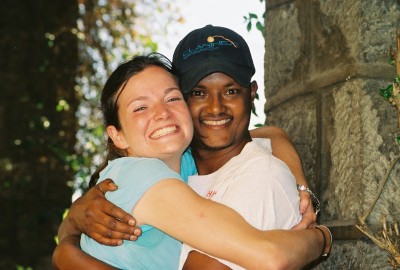
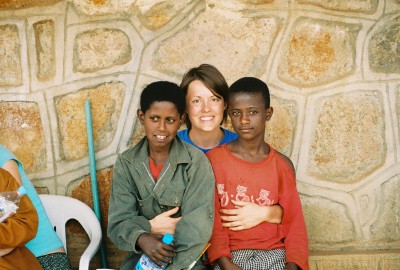
My month in Ethiopia has made me realize how easy we have it in America compared to the hardships of Ethiopia. It was really eye-opening to see how little they have compared to what we have, and yet, I probably saw more smiling faces than I ever have before. We take so many things for granted in this country, like clothing, food, clean water, shelter, and healthcare, but to most Ethiopians, these things are precious and hard to come by. It was a very humbling experience to see such happy people who have such seemingly miserable lives by our standards. They are truly unspoiled and seeing that made me very grateful for what I have and ashamed that I do take so many things for granted every day. Although my contributions to the hospital in the grand scheme of things was small, they were received with such gratitude and it made me realize that you don’t need a medical degree or a large bank account to make a positive impact in a country that so desperately needs help. It merely needs people who care and want to help improve the quality of life there, one small step at a time.
I am so grateful to have the opportunity to experience “my” little piece of Africa and take a step back from the hustle and bustle of the life of a college student in one of the wealthiest countries in the world, and contrast it with life in Ethiopia, one of the poorest countries in the world. I will definitely be returning someday, and it is my hope that when I do, I will see the culmination of many other positive impacts made by people who care, and the beautiful smiling faces of those that they have helped to give a little hope.